When heavy rain overloads the system, wastewater can push back up the sewer line and out through the lowest drains in a house: a shower, tub, floor drain or toilet. FEMA recommends having a licensed plumber install sewer backflow valves on pipes entering the building. Sewage cleanup is a contaminated-water job, so it needs protective gear and usually professional help.
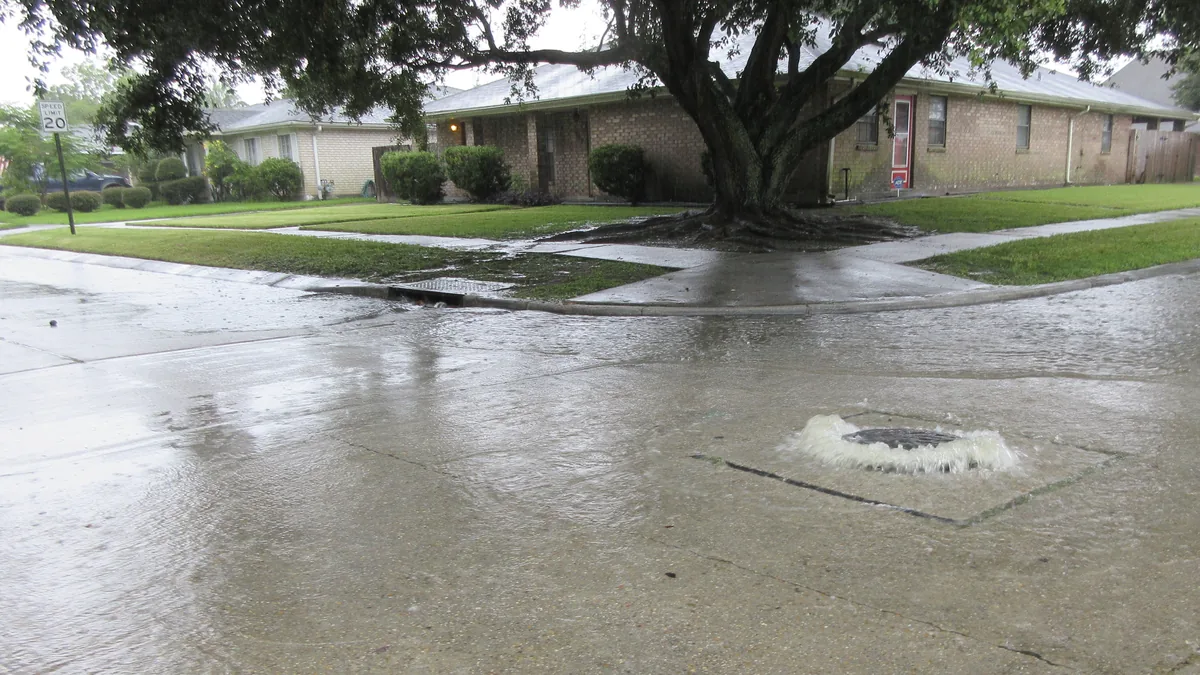
Why backups happen during floods
Your house drains by gravity into the public sewer main. During a big rain, several things can push water the wrong way:
- Overloaded mains. Stormwater gets into sewer lines through cracks, loose joints and illegal connections, and fills them faster than lift stations can pump.
- High water outside. If floodwater is higher than your lowest drain, it pushes back through the line.
- Power loss at pump or lift stations, which slows or stops flow.
- Blockages in your own sewer line, such as roots, grease or debris.
Water takes the lowest exit. In a slab house, that's usually a shower or tub drain, or the lowest toilet. In a raised house, the fixtures sit higher, so backups are less common but still happen when the main is badly overloaded.
What a backwater valve does
A backwater valve, also called a backflow valve or check valve, sits in the sewer line between the house and the main. It lets wastewater flow out but closes when water tries to flow back in. FEMA's flood protection advice says to:
- Have a licensed plumber install sewer backflow valves for all pipes entering the building, to stop floodwater and wastewater backing up through toilets, sinks and other drains.
- Install drain plugs for floor drains where they exist.
A few practical points about valves:
- They need a permit and a plumber. Installation means cutting into the main sewer line, usually outside the foundation, and local plumbing codes apply.
- They need maintenance. Debris can keep the flap from closing. Most have an access cap so the valve can be inspected and cleaned.
- They work both ways. While the valve is closed, water from your own sinks and toilets can't leave either. Go easy on water use during a heavy backup.
- They don't stop surface flooding. A valve stops water coming up through the drains, not water coming in the door.
Insurance: check before it happens
The Louisiana Department of Insurance's homeowners guide lists water that backs up through sewers or drains among the losses standard homeowners policies don't cover. Some insurers sell additional coverage for it. FEMA's guide Repairing Your Flooded Home also notes that private companies sell coverage for sewer backup damage that a flood policy doesn't cover. Ask your agent about a sewer backup endorsement and its limit before the next storm.
Safety during a sewage backup
Sewage carries bacteria, viruses and parasites. Health guidance is consistent:
- Keep children and pets away from the affected area until cleanup is finished, as the CDC advises.
- Wear protection. The CDC advises rubber boots, rubber gloves and goggles during cleanup when sewage is involved.
- Don't use the plumbing until the backup has cleared and the line is confirmed working.
- Shut off power to the affected area if water is near outlets, cords or appliances.
- Wash up with soap and water after cleanup. The CDC says to wash cleanup clothes in hot water and detergent, separately from other laundry.
What has to go
Sewage changes what can be saved:
- Carpet and pad soaked with sewage are generally thrown away.
- Drywall and insulation that sewage reached usually have to be cut out and replaced.
- Upholstered furniture, mattresses and stuffed items usually can't be safely cleaned.
- Hard surfaces, like tile, sealed concrete, metal and solid wood, can usually be cleaned and disinfected.
The EPA says that if water damage comes from sewage or other contaminated water, you should call a professional with experience cleaning and fixing buildings damaged by contaminated water.
Steps after a backup
- Stop using water in the house.
- Photograph the damage and the waterline.
- Call a plumber to clear the line and find the cause.
- Get standing sewage removed and contaminated materials taken out.
- Clean and disinfect hard surfaces, then dry the structure fully.
- Ask the plumber about a backwater valve while the line is open.
Getting it cleaned up
The sewage backup cleanup page explains how contaminated-water jobs are usually handled, from extraction to disinfection and drying. The Metairie page covers Jefferson Parish flood history and housing.
Use the form and your details go to one local company that handles this kind of job, and they may get in touch.
FAQs
Why did sewage come up through my shower during a storm?
The sewer main was likely overloaded, so wastewater pushed back up your line and out through the lowest drain in the house.
What is a backwater valve?
A valve in your sewer line that lets wastewater flow out but closes to stop it flowing back in. FEMA recommends having a licensed plumber install one.
Does homeowners insurance cover sewer backup?
Standard homeowners policies usually exclude it, according to the Louisiana Department of Insurance. Some insurers sell a separate endorsement.
Can I clean up sewage myself?
The EPA recommends a professional when sewage or other contaminated water is involved. Anyone helping should wear boots, gloves and goggles.
Sources
- FEMA, Protect Your Home from Future Flooding.
- EPA, Mold Cleanup in Your Home.
- CDC, Natural Disasters and Severe Weather: Clean Up Safely.
- Louisiana Department of Insurance, Consumer's Guide to Homeowners Insurance.
- FEMA and American Red Cross, Repairing Your Flooded Home (FEMA P-234).