A raised house usually needs drying from below as well as inside, while a slab house often needs flooring pulled so the concrete can dry. Around New Orleans you'll find both: older shotguns and Creole cottages on raised piers, and later suburban homes on slabs, a pattern described in the state's history of building elevation in the city. Knowing which you have tells you what the drying crew should be doing.
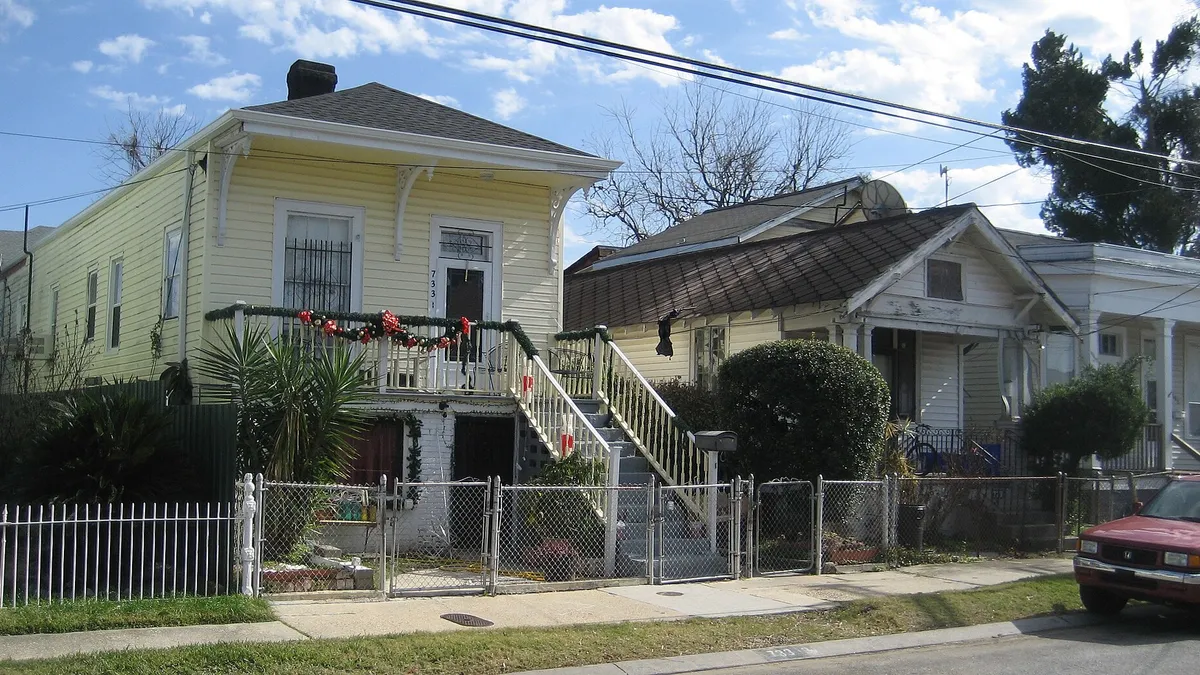
Raised pier-and-beam houses
Builders raised older houses so floodwater could pass underneath. That works until water rises above the floor.
- Water only under the house: sills, joists, insulation, ductwork and anything stored below get wet. Drying means moving air through the crawl area and checking the underside of the floor.
- Water above the floorboards: the subfloor is wet from both sides, wall bottoms and plaster soak up water, and old wood floors may cup. Equipment usually runs both inside and underneath.
- Plaster on lath holds water and dries slowly, but often survives clean water better than drywall.
Slab-on-grade houses
Concrete soaks up water and gives it back slowly.
- Flooring on the slab traps moisture. Glued vinyl, tile and engineered wood often have to come up.
- Wall bottoms wick water up from the slab. A flood cut lets the cavity dry.
- Low thresholds mean a few inches of street water can come straight in.
The drying class
The IICRC S500 standard rates drying jobs from Class 1 to Class 4. Wet plaster, hardwood and slabs under flooring push a job toward Class 4, which takes the longest. The raised house vs slab drying planner estimates your class and the order of work.
For both
- Keep windows closed and the AC on; the outside air here is often too humid to help.
- Ask for daily moisture readings and a written log.
- Don't rebuild until readings match dry reference points.
More on equipment and readings is on the structural drying page, and the Metairie page covers a suburb full of slab homes.
FAQs
Which type floods more easily?
A low slab takes water at lower depths. A raised house stays dry inside until water rises above the piers.
Is a raised house cheaper to dry?
Not always. When water gets into the floor system, drying from both sides can add equipment and time.
Can heart pine floors be saved?
Sometimes, if they're dried early with specialty mats. Ask the provider to track readings before deciding.
Sources
- Louisiana Office of Cultural Development, The History of Building Elevation in New Orleans.
- City of New Orleans HDLC, Guidelines for Storm Preparedness and Resilience.
- IICRC S500 drying classes.