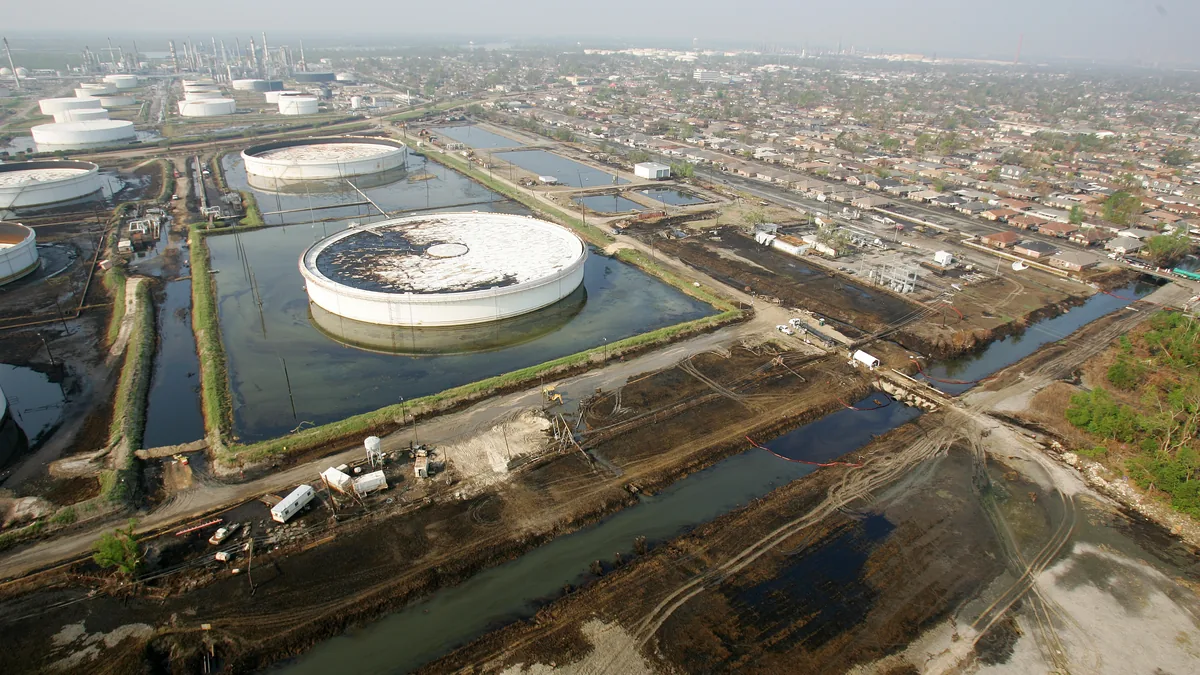
During Hurricane Katrina, a damaged storage tank at the Murphy Oil refinery in Meraux released about 1,050,000 gallons of crude oil into the floodwater. The EPA says it affected about 1,700 homes over roughly one square mile of Chalmette and Meraux. It is the clearest local case of floodwater carrying more than mud and sewage.
What happened
According to the EPA's archived Katrina response pages, Murphy Oil USA notified the EPA on September 4, 2005 about a spill at its Meraux refinery in St. Bernard Parish. The details:
- The tank. A 250,000-barrel above-ground storage tank (tank 250-2) was dislodged, lifted and damaged by the flooding.
- The oil. The tank held 65,000 barrels of mixed crude oil and released about 25,110 barrels, or roughly 1,050,000 gallons.
- The neighborhood. The released oil affected approximately 1,700 homes in the adjacent residential area, covering about one square mile.
- The canals. The 20 Arpent, 40 Arpent, Meraux, Corinnes and Delarond canals, plus unnamed interceptor canals, were also affected.
The EPA and the U.S. Coast Guard split oversight of the cleanup. The Coast Guard oversaw removal of free oil from canals, the tank farm, streets and storm drains, and the EPA page reports about 18,000 barrels recovered at that point. The EPA worked with the Louisiana Department of Environmental Quality on public areas such as parks, schoolyards and roadsides.
What the sampling found
The EPA oversaw sampling of residential properties. At the time of its report, 8,808 sediment samples had been collected from 5,440 properties, with 10% split for independent EPA analysis. The main contaminants found in sediment were:
- Polycyclic aromatic hydrocarbons (PAHs), found above state residential screening levels in about 2.5% of the split samples.
- Diesel-range and oil-range organic chemicals, above screening levels in about 29% and 21% of samples respectively.
- Arsenic, which exceeded the state screening level in two samples.
Properties above state cleanup standards were cleaned up and resampled to confirm the standards had been met.
The safety advice given to residents
The EPA page repeats a Louisiana Department of Health and Hospitals fact sheet for anyone entering or cleaning oil-contaminated properties in St. Bernard. The advice still applies whenever floodwater carries fuel or oil:
- Protect your skin. Wear oil-resistant gloves, keep arms and legs covered, and wear coveralls or clothes you can throw away. If oil gets on your skin, wash well with soap and water.
- Ventilate. Open doors and windows in an oil-contaminated building.
- Don't spread it. Use boot covers or leave work boots at the property. Don't track oily sediment into your car, and don't take oily items to other places.
- Keep laundry separate. Don't wash clothes worn in the spill area with family laundry.
- Keep children and pets out of the contaminated area.
The EPA notes that brief skin contact with crude oil can cause itchy, red, sore or peeling skin.
Oil in floodwater today
A refinery spill on that scale is rare, but smaller fuel contamination happens in many floods:
- Vehicles and equipment. Flooded cars, boats, mowers and generators can leak gasoline and oil.
- Fuel tanks. FEMA's guide Repairing Your Flooded Home notes that oil tanks, even buried ones, can float in a flood. Propane tanks can move too.
- Street runoff. Floodwater picks up oil and chemicals from roads, garages and businesses.
Signs of fuel or oil contamination include a sheen on water, a petroleum smell, and dark, sticky residue on walls and floors.
What it changes for cleanup
When floodwater carries oil, cleanup is harder and more materials have to go:
- Porous materials usually can't be saved. Drywall, insulation, carpet, pad and upholstered furniture soak up oil and hold the smell.
- Odor can linger in wood framing and slabs. Hard surfaces need degreasing before ordinary disinfecting, and sometimes sealing after they dry.
- Waste may need separate handling. Ask your parish how to dispose of oily debris. It may not belong in the regular debris pile.
- Document it. Photograph the sheen, the residue and the waterline. Keep that record for your insurer and anyone else involved in the claim.
If you smell fuel strongly or see pooled product, stay out and call the fire department or your parish emergency office first.
Getting the house cleaned up
Oily or contaminated floodwater calls for full protective gear, careful removal of soaked materials and thorough cleaning before drying. The flood cleanup page explains how that work is usually done. The Chalmette and St. Bernard page covers the parish's flood history.
Requests made through this site go to one independent local cleanup company, which may reach out to you directly about your property.
FAQs
How much oil spilled from Murphy Oil during Katrina?
The EPA reports about 25,110 barrels, roughly 1,050,000 gallons, from a damaged storage tank at the Meraux refinery.
How many homes did the spill affect?
About 1,700 homes in the neighboring residential area, covering roughly one square mile, according to the EPA.
Is oily floodwater cleanup different from normal flood cleanup?
Yes. Oil soaks into porous materials and holds odor, so more materials usually have to be removed, and workers need oil-resistant gloves and disposable clothing.
Can I wash oily work clothes with the family laundry?
Louisiana health officials advised against it after the Murphy spill. Wash them separately or throw them away.
Sources
- U.S. EPA, Murphy Oil Spill: Response to 2005 Hurricanes (archived).
- FEMA and American Red Cross, Repairing Your Flooded Home (FEMA P-234).