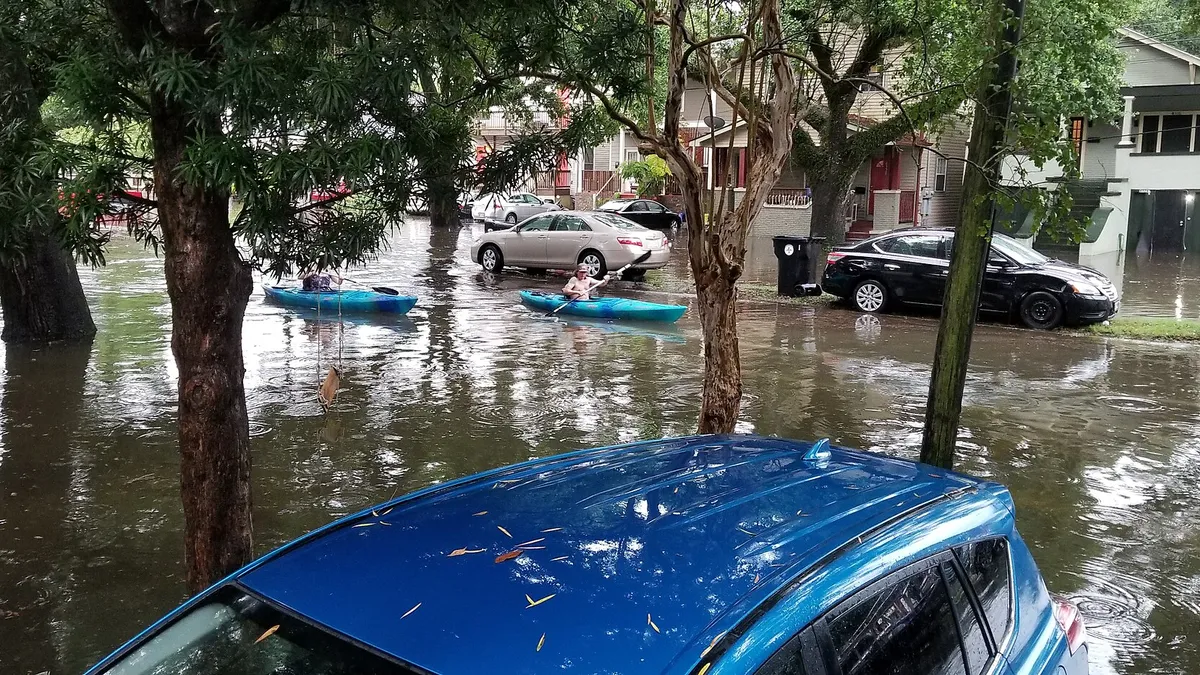
On August 5, 2017, a thunderstorm parked over Mid-City and dropped more than 9 inches of rain in three to six hours, according to a later National Weather Service analysis. The city's drainage system is designed for far less, so water filled streets and crept into homes and cars with no hurricane in sight. Understanding why helps you act fast the next time it happens.
A city that has to pump every drop
The NWS paper describes New Orleans as a set of polders: low basins surrounded by levees with no downhill exit. Rain flows into street drains, through underground lines to a Sewerage & Water Board pumping station, and up into outfall canals that carry it to Lake Pontchartrain. The stated capacity is about one inch of rain in the first hour and half an inch each hour after. Inside the main polder, ground elevations run from below −10 feet to about +20 feet, so the low blocks fill first.
Why 2017 overwhelmed it
Real-time estimates during the storm were about 6 to 7 inches. Gauges collected afterward showed Mid-City got over 9 inches, including at least 9 in three hours, an event rarer than a 1-in-100 annual chance for a three-hour total. No pump system built to the stated rate could have kept up.
If street water reaches your house
- Stay out of the water where outlets or cords are submerged, and keep children away from it.
- Photograph the waterline inside and out before anything moves.
- Treat it as contaminated. Street water carries sewage and debris, so it is Category 3 water. Soaked drywall, insulation and carpet usually come out.
- Call your flood insurer. Rising water is generally excluded from homeowners policies; it goes to an NFIP or private flood policy.
- Start drying within 24 to 48 hours, the EPA's window for limiting mold.
The flood cleanup page walks through each step, and the New Orleans page covers the neighborhoods where requests come from.
Is it flood or a leak?
A cloudburst often brings more than one kind of water. If it came under the door, it is flood. If it came up through the shower drain, it may be a sewage backup. If it came through the ceiling, it is likely a roof leak. The street flood or indoor leak sorter helps you sort it before you call anyone.
What it costs
Flood water is the most contaminated category, so drying runs $9–$12 per square foot on the pricing page, and a whole-house flood can pass $15,000.
FAQs
Will the pumps keep up next time?
They are designed for about an inch in the first hour. Rain heavier than that will collect in low streets until the system catches up.
Does flood insurance cover a cloudburst like this?
Rising water from heavy rain is generally flood, covered by an NFIP or private flood policy rather than homeowners insurance. Your policy decides.
Can I wait until the water drains to call?
Call your insurer and a provider as soon as it's safe. Drying should start within 24 to 48 hours.
Sources
- W. Scott Lincoln, NWS Lower Mississippi River Forecast Center, Rainfall Analysis for the August 5, 2017, New Orleans Flash Flood Event.
- EPA, Mold, moisture and your home.