Hurricane Zeta made landfall near Cocodrie on October 28, 2020 as a Category 3 storm, and its eye passed directly over New Orleans a couple of hours later. The National Hurricane Center says hundreds of homes in Orleans, Jefferson and nearby parishes had significant wind damage, mostly to roofs, and about half a million Louisiana customers lost power.
The storm in brief
The NHC's tropical cyclone report on Zeta records:
- Landfall near Cocodrie, Louisiana, around 4 p.m. CDT (2100 UTC) on October 28, 2020, with estimated winds of 100 knots (about 115 mph) and a minimum pressure of 970 millibars.
- A direct hit on the metro area. The eye moved directly over New Orleans a couple of hours after landfall, then crossed into southern Mississippi that night.
- A record. Zeta was the latest major hurricane on record to make landfall in the continental United States in a calendar year. The old record was the Tampa Bay hurricane of October 25, 1921.
- Fast movement. Zeta raced northeast, bringing strong wind well inland through Mississippi, Alabama and Georgia.
What happened in Jefferson, Orleans and nearby parishes
The NHC report's Louisiana summary describes:
- Roof damage. Hurricane-force winds caused widespread damage near and east of the center's track. Significant wind damage was noted in many parishes south of Lake Pontchartrain, including Orleans, Jefferson, St. Bernard, Plaquemines, Terrebonne and Lafourche. Hundreds of homes had significant wind damage with numerous lost or severely damaged roofs.
- Destroyed homes. About 100 homes were destroyed, and local officials estimated thousands more had minor damage.
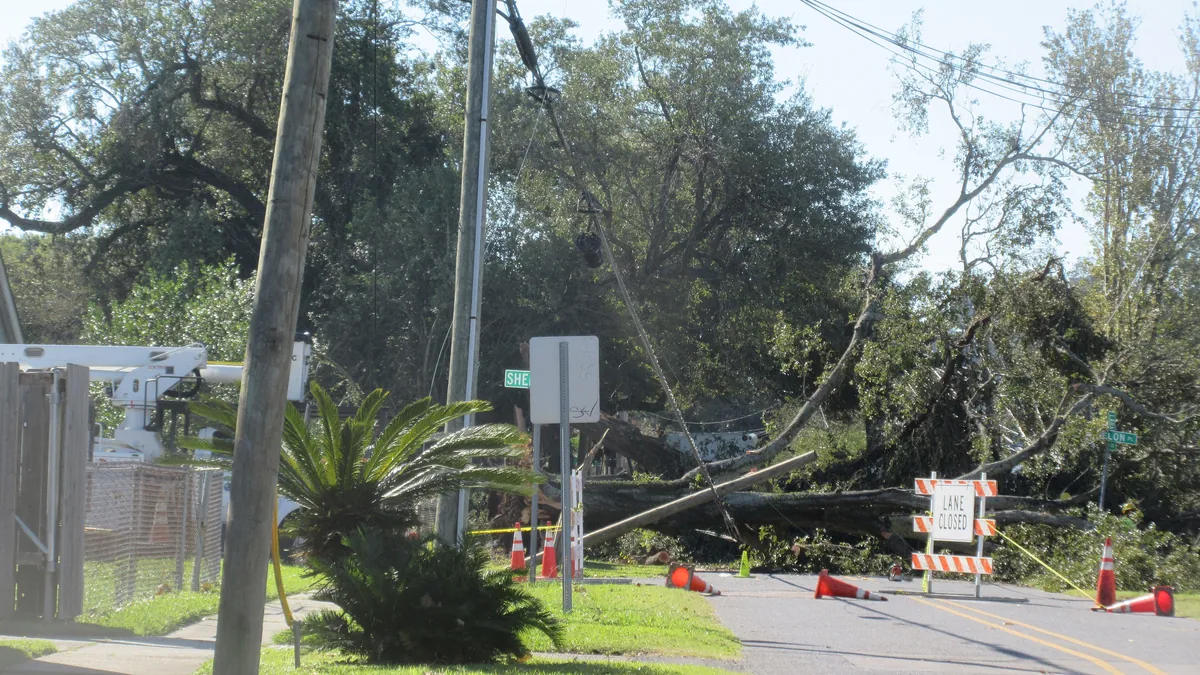
- Trees and lines. Hundreds of power lines and poles were downed or snapped, some trees fell on homes, and more than 500 tree emergencies (trees down on a road or building) were reported.
- Power. About half a million Louisiana customers lost power at some point, and more than 3,000 people stayed in shelters.
- Cost. NCEI estimated about $1.25 billion in damage in Louisiana, out of $4.4 billion nationwide.
The report also lists an indirect death in New Orleans: a person electrocuted by a power line.
Why a fast wind storm still causes water damage
Zeta was mainly a wind event for the metro area, but wind damage quickly turns into water damage:
- Lost shingles and underlayment expose the roof deck. The next rain, often the storm's own back side, goes straight into the attic.
- Fallen trees and limbs can puncture the roof, crack rafters and break windows, opening the house to rain.
- Wet attic insulation stays wet for a long time and holds water against the ceiling below.
- Power outages stop fans, dehumidifiers and air conditioning, so wet materials sit longer in a humid, closed house.
That's why even a "minor" roof damage report can mean wet ceilings and walls a few days later.
Right after a wind storm
Safety first
- Stay away from downed lines. Treat every wire as live. Zeta's indirect death in New Orleans was an electrocution.
- Don't climb onto a damaged roof, especially when it's wet or a tree is still on it.
- If a tree is on the house, leave removal to a qualified tree service.
Protect the house
- Get openings tarped as soon as it's safe, by a roofer or emergency service.
- Move belongings away from leaks, and catch water where you can.
- Keep receipts for tarps, emergency work and supplies.
Document it
- Photograph the roof from the ground, plus every ceiling stain, wet wall and fallen tree, before anything is moved.
- Note the date and time the damage happened and when you first saw water inside.
Wind claims and named-storm deductibles
In Louisiana, wind damage from a named storm is usually handled under your homeowners or wind policy, often with a separate named-storm or hurricane deductible that is a percentage of your dwelling coverage. That can be much larger than your regular deductible. The named storm deductible calculator on this site helps you estimate the amount before you file. Your policy and adjuster decide the final figure.
Drying out after roof damage
Once the roof is covered, the inside still has to be dried. Wet attic insulation usually has to come out, ceiling drywall may need to be opened, and walls should be checked with a moisture meter even where they look dry. The hurricane and storm damage page explains how emergency protection and drying are usually handled. The Metairie page covers Jefferson Parish housing and storm history.
Nobody on this site does the work. A request here is passed to a single local cleanup company that can follow up to check your home.
FAQs
What category was Hurricane Zeta at landfall?
The NHC estimates 100 knots (about 115 mph), a Category 3 hurricane, at landfall near Cocodrie, Louisiana on October 28, 2020.
Did Zeta's eye pass over New Orleans?
Yes. The NHC report says the eye moved directly over New Orleans a couple of hours after landfall.
How much damage did Zeta do in Louisiana?
NCEI estimated about $1.25 billion in Louisiana, with hundreds of homes having significant wind damage and about 100 destroyed.
Why did a wind storm cause water damage inside homes?
Lost shingles, fallen trees and broken windows let rain into attics and walls, and power outages slowed drying.
Sources
- National Hurricane Center, Tropical Cyclone Report: Hurricane Zeta (AL282020).
- Louisiana Department of Insurance, Consumer's Guide to Homeowners Insurance.