Hurricane Betsy struck southeast Louisiana on September 9, 1965 as a Category 4 storm. Levees failed along the MRGO in the Lower Ninth Ward and on both sides of the Industrial Canal, flooding more than 164,000 New Orleans homes. In St. Bernard and the Ninth Ward, water reached the eaves. For 40 years, Betsy was the flood the region measured everything against.
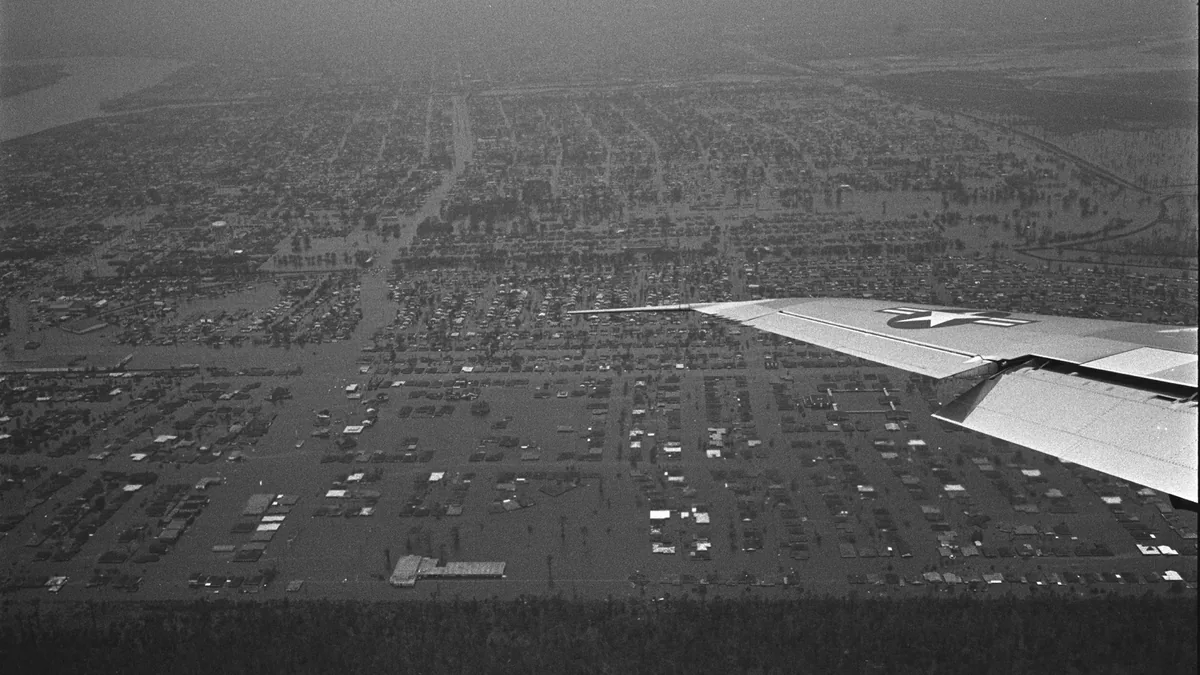
The storm
The National Weather Service office in Lake Charles keeps a detailed history of Betsy:
- Landfall near Grand Isle around 10 p.m. CST on September 9, 1965, as a Category 4 hurricane with maximum sustained winds just over 130 mph and a minimum pressure of 946 millibars.
- Speed. Betsy moved fast. It stayed a hurricane as far inland as Baton Rouge by daybreak on September 10.
- Surge. Water marks of 10 to 15 feet above mean sea level were found along and east of the track over southeast Louisiana.
- Rain. Southeast Louisiana got 5 to 12 inches. Because the storm moved quickly, rain was not the main threat. Surge was.
The New Orleans Weather Bureau radar captured its last image of Betsy at 10:46 p.m. before the power failed.
The flooding
The 64 Parishes encyclopedia, published by the Louisiana Endowment for the Humanities, describes what followed:
- New Orleans was swamped by a storm surge of about ten feet that lasted for days.
- Levees along the Mississippi River Gulf Outlet in the Lower Ninth Ward, and on both sides of the Industrial Canal, failed.
- More than 164,000 New Orleans homes flooded.
- In the Ninth Ward and neighboring St. Bernard Parish, water reached eave height. Many people drowned, and some victims were later found in attics where they had tried to escape.
- The fishing villages of Delacroix Island and Yscloskey in St. Bernard were swept away entirely.
Betsy killed 76 people, most of them in Louisiana, though reports vary slightly. It was the first hurricane to cause more than $1 billion in damage, an estimated $1.42 billion at the time.
What Betsy changed
Betsy led directly to the U.S. Army Corps of Engineers' Hurricane Protection Program, which built the modern levee system around New Orleans. The 64 Parishes entry makes a sobering point: the new levees were designed to withstand a storm like Betsy, which was powerful and fast-moving. The demands of a large, slow storm like Katrina 40 years later were different, and the system failed.
Today's Hurricane and Storm Damage Risk Reduction System was rebuilt after 2005 around the 100-year storm surge, a different design basis from the post-Betsy levees.
Cleaning up after eave-high water
The way homes were cleaned out after Betsy and after Katrina has a lot in common. When water reaches the ceiling, almost nothing below it can be saved:
- Everything porous goes. Drywall or plaster, insulation, carpet, mattresses, upholstered furniture and most cabinets are lost when they sit under contaminated water for days.
- Ceilings come down too. Water above the ceiling soaks the ceiling material and attic insulation. FEMA advises replacing wallboard ceilings that floodwater reached.
- The structure is gutted to the studs. Framing is cleaned, disinfected and dried before anything is rebuilt.
- Mud is everywhere. Long-standing water leaves heavy silt in wall cavities, ducts and under floors.
- Drying takes weeks. Wood that sat underwater for days takes a long time to reach normal moisture levels. Rebuilding too soon traps moisture and invites mold.
Remembering the risk
Betsy is now more than 60 years in the past, but it explains why St. Bernard and the Lower Ninth flooded so badly in 1965 and 2005: they sit low, between the river, the lakes and the marsh. Today's barriers and levees lower that risk, but don't remove it. The practical steps haven't changed:
- Keep flood insurance on homes and belongings.
- Know your evacuation route and leave early.
- Photograph your home and contents each year.
- Store important papers and photos high or digitally.
Getting help after a flood
When a house has been under deep water, cleanup means full removal of soaked materials, cleaning and disinfecting, and drying before rebuilding. The flood cleanup page explains how that work is usually organized. The Chalmette and St. Bernard page covers the parish's flood history.
Ask for help here and your request is handed to one local cleanup company, who may call or email you.
FAQs
When did Hurricane Betsy hit New Orleans?
Betsy made landfall near Grand Isle around 10 p.m. CST on September 9, 1965, as a Category 4 hurricane, and its surge flooded much of New Orleans that night.
How many homes did Betsy flood?
The 64 Parishes encyclopedia says more than 164,000 New Orleans homes flooded.
Why did the Lower Ninth Ward flood in Betsy?
Levees along the MRGO in the Lower Ninth Ward and on both sides of the Industrial Canal failed.
What did Betsy lead to?
It led to the Army Corps of Engineers' Hurricane Protection Program and the levee system that was in place when Katrina struck in 2005.
Sources
- National Weather Service Lake Charles, Hurricane Betsy 1965.
- Kelby Ouchley, 64 Parishes, Hurricane Betsy.
- FEMA and American Red Cross, Repairing Your Flooded Home (FEMA P-234).