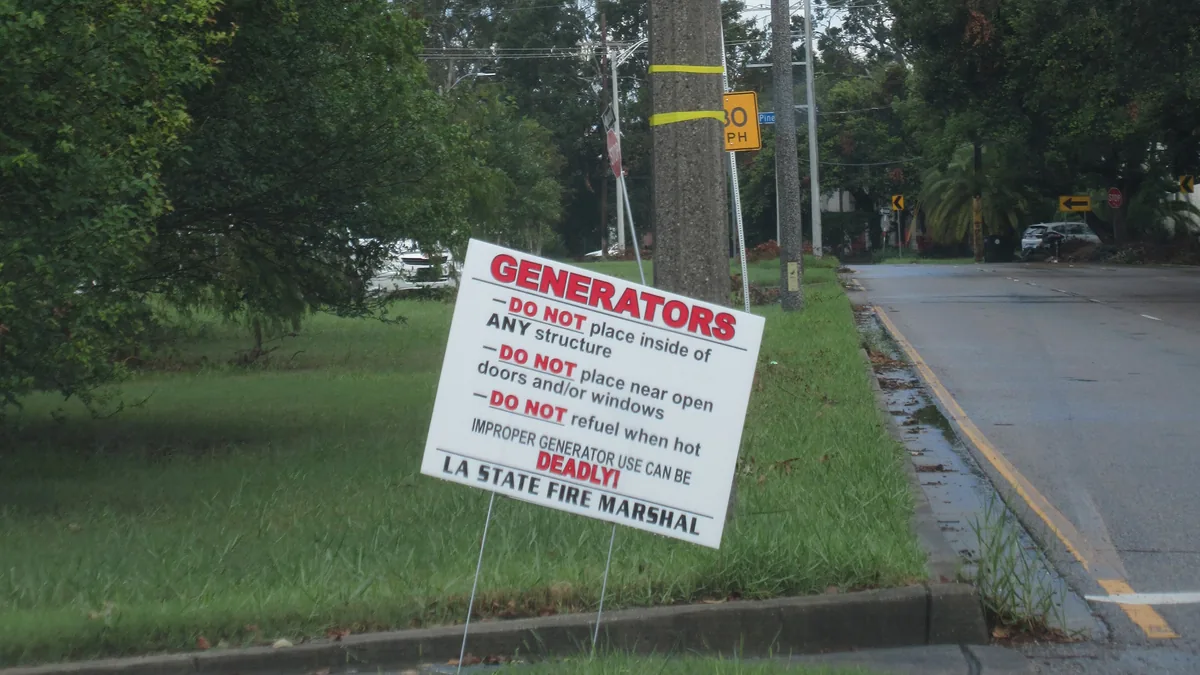
Portable generators should only run outdoors, more than 20 feet from windows, doors and vents, with a battery-powered carbon monoxide alarm inside the house. That's the CDC's rule, and storm records show why. After Hurricane Ida, the National Hurricane Center counted six carbon monoxide deaths in Louisiana.
What the storm reports show
Carbon monoxide (CO) poisoning usually shows up in storm reports as an "indirect" death, one that happens after the storm has passed:
- Hurricane Ida (2021). The NHC's report lists six CO deaths in Louisiana among Ida's indirect deaths. The National Weather Service's local post-storm report lists two CO deaths from generator use in Orleans Parish and one CO-related death in St. John the Baptist Parish. With power out across the region, generators were running in nearly every neighborhood.
- Hurricane Francine (2024). The NHC report says 18 emergency department visits in southeast Louisiana were due to CO exposure after the storm.
Nationally, the CDC says more than 400 Americans die each year from unintentional CO poisoning not linked to fires, more than 100,000 visit an emergency department, and more than 14,000 are hospitalized.
Why it catches people off guard
CO is odorless and colorless. You can't smell generator exhaust drifting through a window, and you won't see it filling a room. The CDC lists the most common symptoms as headache, dizziness, weakness, upset stomach, vomiting, chest pain and confusion, often described as "flu-like." People who are asleep can die before they ever notice symptoms.
After a storm, several risks pile up: the house is closed tight because of heat or rain, neighbors' generators run close together on narrow lots, and exhausted people sleep through the night with a generator running nearby.
The CDC and Ready.gov rules
Placement
- Never run a generator inside your home or garage, even with doors and windows open.
- Run it outside, more than 20 feet from windows, doors and vents. Ready.gov adds attached garages to that list.
- Point the exhaust away from your house and your neighbor's.
Alarms
- Use a battery-powered or battery backup CO alarm in your home whenever a generator is running.
- Ready.gov recommends working CO alarms on every level of the home.
- The CDC says to replace CO detectors per the manufacturer's instructions or every five years.
Fuel and electricity
- Let the generator cool before refueling. Ready.gov warns that fuel spilled on hot engine parts can ignite.
- Keep the generator dry. Touching a wet generator, or devices plugged into one, can cause a shock.
- Connect appliances with heavy-duty extension cords. The CDC warns against connecting a generator to your home's circuits without an approved automatic-interrupt device. A generator that is still connected when grid power returns can start a fire and endanger line workers. Have a licensed electrician install a proper transfer switch.
Other fuel-burning equipment
- Never use a gas stove or oven to heat the house.
- Never use charcoal grills or camp stoves indoors.
Generators during cleanup
Generators often power the fans, pumps, dehumidifiers and work lights used after a flood, which creates its own risks:
- Wet ground and standing water. Keep the generator and cords out of water and away from wet floors.
- Enclosed work areas. A generator in a carport, under a raised house or beside a crawlspace opening can push CO into the house. Under-house spaces are a particular risk on raised homes.
- Long hours. Crews and homeowners working long days get tired, and early CO symptoms are easy to blame on heat and fatigue.
If anyone feels dizzy, sick or confused while a generator is running, get everyone into fresh air right away and call 911.
If a CO alarm goes off
- Get everyone, including pets, outside into fresh air.
- Call 911 or the fire department.
- Don't go back in until responders say it's safe.
- Find and fix the source before restarting the generator.
Safer power for drying
Professional drying equipment can draw a lot of power. When the grid is down, a restoration provider should plan where generators sit, how cords run and how the house is ventilated. The hurricane and storm damage page explains what usually happens in the first days after a storm. The New Orleans page covers the city's storm history.
Nobody on this site does the work. A request here is passed to a single local cleanup company that can follow up.
FAQs
How far from the house should a generator be?
The CDC says more than 20 feet from windows, doors and vents, and never in a garage, even with the door open.
How many people died from generator CO after Ida?
The NHC's Ida report lists six carbon monoxide deaths in Louisiana. The NWS report lists two from generator use in Orleans Parish.
Do I need a CO alarm if the generator is outside?
Yes. The CDC recommends a battery-powered or battery backup CO alarm in your home whenever you use a generator.
Can I plug my generator into a wall outlet?
No. Use heavy-duty extension cords, or have an electrician install a transfer switch for house circuits.
Sources
- CDC, Carbon Monoxide (CO) Poisoning Basics.
- Ready.gov, Power Outages.
- CDC, Guidelines for Cleaning Safely After a Disaster.
- National Hurricane Center, Tropical Cyclone Report: Hurricane Ida (AL092021).
- National Hurricane Center, Tropical Cyclone Report: Hurricane Francine (AL062024).
- National Weather Service, Post Tropical Cyclone Report, Hurricane Ida.