FEMA's guide Repairing Your Flooded Home gives a simple rule. If floodwater soaked drywall four feet or more above the floor, take all of it down. If the water was lower, remove the bottom four feet. That horizontal line is the "flood cut," and wet insulation behind it has to come out too, unless it's foam board.
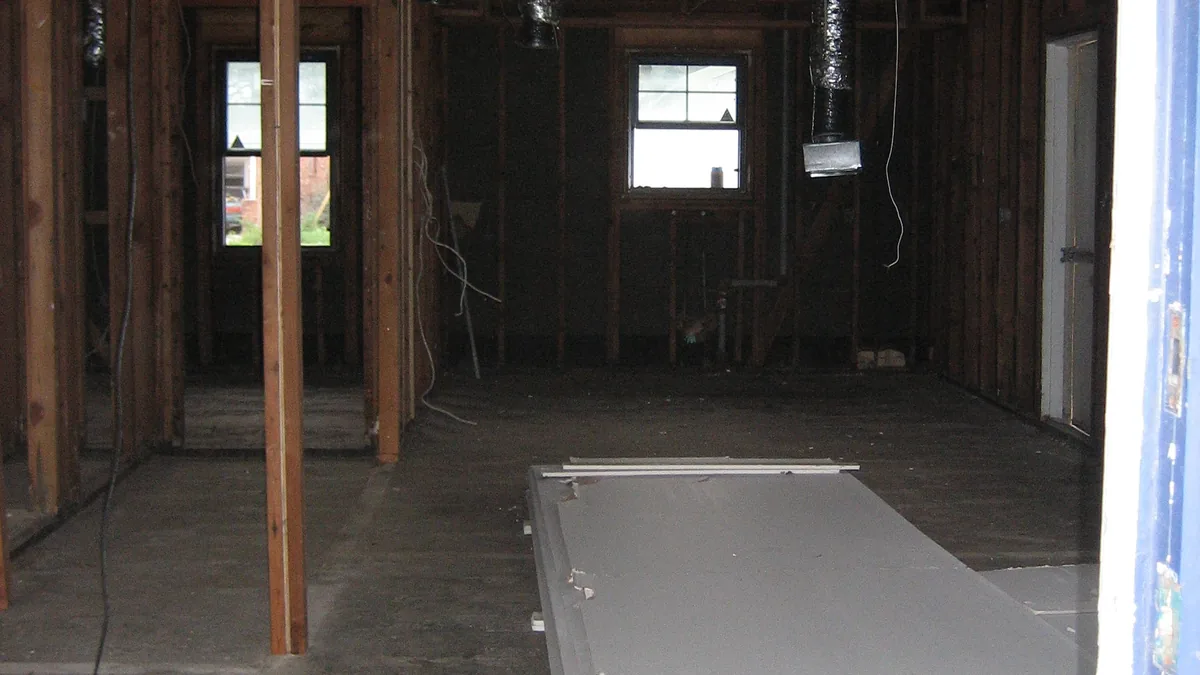
Why drywall can't be dried and kept
Drywall, also called wallboard or sheetrock, is gypsum between layers of paper. FEMA's guide explains why it is treated differently from wood:
- It wicks water upward. Wallboard acts like a sponge, drawing water above the flood level. The wet line inside the wall is often higher than the stain you can see.
- It falls apart. Wet wallboard becomes fragile and crumbles when bumped.
- It keeps the contamination. Even after it dries, mud and contaminants stay inside. FEMA says wallboard soaked by floodwater presents a permanent health hazard and recommends throwing it out.
Clean rainwater is different. FEMA notes that wallboard soaked only by clean rainwater can sometimes be dried in place with plenty of fresh air. Floodwater from the street, a canal or the lake isn't clean.
The four-foot rule
FEMA's guidance for wallboard walls:
- Water reached four feet or higher: take down all the wallboard and replace it.
- Water stayed below four feet: remove the lower four feet of wallboard.
- Rebuild sideways: fill the gap with standard 4-by-8-foot sheets turned on their side. If the next flood is less than four feet deep, only that bottom row has to be replaced.
Many crews cut a little higher than the visible waterline because of wicking. Moisture meter readings above the cut line tell you whether you've gone high enough.
Draining and opening wall cavities
Before or during the flood cut, FEMA describes how to find and drain water trapped in walls:
- Take off the baseboard.
- Push an awl or knife into the wall about 2 inches above the floor, just above the bottom plate. If water drips out, cut or drill a hole big enough to let it drain. Use a hand or cordless tool to avoid shock.
- Repeat in each stud bay, usually every 16 or 24 inches.
- Watch for wiring, which usually runs at about outlet height.
What else comes out
Insulation. FEMA treats the three common types differently:
- Fiberglass batts should be thrown away if muddy.
- Cellulose (loose or blown-in treated paper) holds water a long time and can lose its mold and fire resistance, so flooded cellulose should be replaced.
- Styrofoam (foam board) survives best and may only need hosing off.
Wall coverings. Vinyl wallcovering seals the wall and stops it drying, and wallpaper paste feeds mold, so FEMA advises removing both from flooded walls.
Doors. Hollow wood doors usually have cardboard spacers inside that collapse when wet, so they generally need replacing.
What usually stays
Wood studs and sills. FEMA says flooding can raise the moisture content of wood to about 30%, making it swell, but wood allowed to dry naturally usually returns to shape. Wet studs and sills don't need to be thrown out as long as they dry properly before new wallboard goes on.
Concrete block walls. The cores drain on their own, and water doesn't damage block the way it damages wood or wallboard.
A practical sequence
- Photograph first. Get the waterline in every room, with a tape measure in the shot, before anything is cut.
- Keep samples. Save a piece of drywall, insulation and flooring for the adjuster if asked.
- Turn off power to affected circuits and have an electrician check them.
- Remove baseboards, then make the cut at four feet or at full height, as FEMA's rule calls for.
- Pull wet insulation and any vinyl wallcovering.
- Clean and disinfect the exposed framing.
- Dry with air movement and dehumidifiers, and confirm with moisture readings before any new wallboard goes on.
Drywall goes into the construction debris pile, separate from appliances and household trash. Ask your parish for the current debris schedule.
Drying comes next
A flood cut is only half the job. The framing, sill plates and slab behind it need to dry to normal levels, and that should be measured, not guessed. The structural drying page explains how drying is set up and checked. The Kenner page covers the area's flood risks and housing.
Use the form and your details go to one local company that handles this kind of job, and they may get in touch to look at your walls.
FAQs
How high should a flood cut be?
FEMA's guide says remove the bottom four feet of wallboard if water stayed below four feet, and all of it if water reached four feet or higher.
Can I dry flooded drywall and keep it?
Not after floodwater. FEMA says wallboard soaked by floodwater is a permanent health hazard and recommends replacing it.
Do the wood studs have to be replaced?
Usually not. FEMA says wet studs and sills can stay if they dry properly before the wall is closed up.
What insulation can be saved?
Styrofoam board often survives. Muddy fiberglass and flooded cellulose should be replaced.
Sources
- FEMA and American Red Cross, Repairing Your Flooded Home (FEMA P-234), Step 4: Dry Out Your Home, and Step 8: Rebuild and Floodproof.
- EPA, A Brief Guide to Mold, Moisture and Your Home.